
Semiconductor manufacturing is often described through advanced lithography, wafer fabrication, packaging technology, and massive investments in computing infrastructure. Yet beneath these sophisticated processes lies a less glamorous but highly important layer: raw materials and industrial inputs. Copper and palladium are two commodities that can provide useful signals about this underlying cost structure.

This transmission becomes particularly interesting when commodity markets are analyzed alongside interest rates, exchange rates, and credit conditions. Semiconductor manufacturing is a capital-intensive global business, so the cost of materials is only one part of the equation. Financing costs determine how easily companies can expand capacity, currency movements influence imported inputs and overseas revenue, and commodity prices can reveal changes in industrial demand before they become visible in semiconductor company financial statements.
Why Copper Matters to the Semiconductor Ecosystem
Copper occupies a unique position in modern electronics. It is widely used because of its high electrical conductivity, making it important in power distribution, wiring, connectors, printed circuit boards, data-center infrastructure, and numerous components associated with semiconductor systems. Within semiconductor manufacturing, copper is also relevant to advanced interconnect technologies, although the amount and form of copper used varies significantly across processes and products.
The most important point is that copper exposure extends well beyond the silicon wafer itself. A semiconductor factory requires extensive electrical infrastructure, cooling systems, power distribution networks, fabrication equipment, facilities, and supporting systems. New data centers require even more copper-intensive electrical infrastructure as computing density rises.
This means a copper price increase can affect the semiconductor industry through several different channels. A fabrication plant expansion may become more expensive because construction and electrical infrastructure costs rise. A data-center buildout may require larger budgets for power distribution and cabling. Equipment manufacturers may face higher input costs. Packaging and testing facilities can also experience indirect cost pressure through industrial components and logistics.
Palladium Has a Different Transmission Mechanism
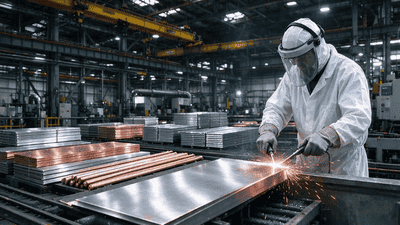
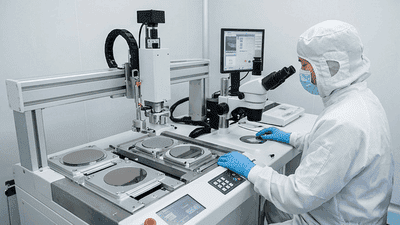
Palladium's relationship with semiconductor manufacturing is more specialized. Unlike copper, it is not a broad infrastructure metal used throughout the entire semiconductor ecosystem. Palladium is associated with specific electronic components, contacts, plating applications, and specialized materials, while its much larger global demand historically comes from other industrial applications.
That distinction matters. A surge in palladium prices does not automatically mean that semiconductor manufacturing costs will rise proportionally. The transmission is more selective and can depend on the specific products and technologies being manufactured.
Nevertheless, palladium can serve as a useful indicator of industrial commodity conditions. Its price is influenced by automotive demand, supply conditions, substitution, recycling, currency movements, and expectations for industrial activity. When palladium prices rise sharply alongside other industrial commodities, the signal may be broader than semiconductor-specific demand. It can indicate a wider shift in manufacturing costs or global industrial activity.
From Commodity Prices to Manufacturing Costs
The connection between commodity prices and semiconductor manufacturing costs is rarely immediate. A commodity can rise significantly without creating an equivalent increase in chip production costs. Semiconductor manufacturers typically purchase processed materials, components, equipment, and services rather than raw commodities directly. Contracts, inventory management, supplier relationships, hedging, and long-term procurement agreements can delay the impact.
Consider a fabrication facility that uses sophisticated equipment containing copper-intensive electrical systems. If copper prices rise suddenly, the equipment supplier may not immediately increase its price because the equipment was designed and contracted months earlier. The effect may appear later when suppliers replenish inventories or renegotiate contracts.
This creates a transmission lag. Commodity prices can move first, supplier costs can adjust next, equipment and construction expenses can follow, and semiconductor company margins may only reflect the effect after several quarters.
The Role of Capital Expenditure

Capital expenditure is where commodity inflation becomes particularly relevant. Semiconductor companies regularly invest billions of dollars in fabs, clean rooms, advanced packaging facilities, testing capacity, and supporting infrastructure. These projects require steel, copper, aluminum, specialty materials, electrical equipment, cooling systems, construction services, and high-end machinery.
When commodity prices rise broadly, the cost of building new capacity can increase even if the price of the semiconductor manufacturing process itself does not change. A project that was financially attractive under one set of assumptions may require a larger budget after construction and equipment costs increase.
Interest rates reinforce this effect. Higher borrowing costs raise the financial burden associated with large capital projects, while higher commodity prices raise the physical cost. When both occur simultaneously, semiconductor manufacturers may become more selective about expansion schedules.
Conversely, falling interest rates can encourage capital expenditure even if commodity prices remain elevated. Strong demand expectations may also allow companies to pass some cost increases through the supply chain, particularly when semiconductor capacity is scarce.
Copper as a Signal of Infrastructure Demand
Copper has another important characteristic: its broad use across the economy makes it sensitive to construction, industrial production, electricity infrastructure, manufacturing investment, and technology expansion. This gives copper prices a potential macroeconomic information function.
Suppose copper prices rise while global manufacturing activity is improving and credit conditions remain supportive. Semiconductor investors may interpret the commodity move partly as evidence of stronger industrial investment. In that environment, higher copper prices are not necessarily viewed only as a cost problem. They may also indicate stronger demand for factories, power systems, electronics, and data infrastructure.
The interpretation changes when copper prices rise because of supply disruptions while industrial demand remains weak. In that case, semiconductor manufacturers could face higher input costs without receiving a corresponding boost in end-market demand.
This is why the source of a commodity-price move matters more than the direction alone.
Exchange Rates Can Amplify or Offset Commodity Inflation
Commodity markets are heavily influenced by currency movements because many internationally traded commodities are priced in US dollars. A stronger dollar can put downward pressure on dollar-denominated commodity prices under some market conditions, while a weaker dollar can have the opposite effect. However, the relationship is not mechanical.
For semiconductor companies operating internationally, exchange rates also affect the effective cost of imported materials and equipment. A manufacturer whose local currency weakens against the dollar may experience higher local-currency costs for dollar-priced inputs. At the same time, companies with significant overseas revenue may receive a translation benefit from the same currency movement.
This creates a complicated balance sheet effect. Commodity inflation and currency depreciation can reinforce each other from a cost perspective, while strong export revenue can partially offset the pressure.
Credit Conditions and the Cost of Expansion
Credit markets provide another important link between commodity prices and semiconductor manufacturing economics. A semiconductor company may be able to absorb a moderate increase in material costs when financing is inexpensive and demand is strong. The same increase can become more problematic when corporate borrowing costs are high and credit spreads are widening.
Higher credit costs affect not only chip manufacturers but also the suppliers supporting them. Equipment companies, construction contractors, materials producers, and infrastructure developers all require capital. If financing becomes more expensive throughout the supply chain, the cumulative cost of expanding semiconductor capacity can rise even when the underlying commodity increase is relatively modest.
This is particularly relevant during periods of aggressive AI infrastructure investment. New data centers and semiconductor fabs are being developed simultaneously, creating competition for electricity infrastructure, construction resources, industrial equipment, and specialized engineering capacity. A combination of strong demand and tighter credit can create a very different cost environment from a traditional semiconductor downturn.
Can Higher Copper Prices Become an Inflation Signal?
Commodity prices can influence broader inflation expectations, which in turn affect central-bank policy and interest rates. A sustained increase in copper and other industrial materials may contribute to concerns about input-cost inflation, particularly when accompanied by strong demand.
For semiconductor companies, this creates a second-order transmission mechanism. Higher commodity prices can increase manufacturing and construction costs. If they also contribute to higher inflation expectations, monetary policy may remain restrictive for longer. Higher interest rates then increase the cost of financing new semiconductor facilities.
The result is a feedback loop involving commodities, inflation, monetary policy, financing costs, and capital expenditure.
The Difference Between Cost Inflation and Demand Inflation
One of the most useful distinctions is between cost-driven commodity inflation and demand-driven commodity inflation. If copper prices rise because global manufacturing and infrastructure investment are accelerating, semiconductor companies may simultaneously experience higher input costs and stronger demand. This can produce a relatively manageable environment for profitable chipmakers.
If copper prices rise because of supply disruptions while semiconductor demand remains weak, the situation is less favorable. Companies may face higher costs without sufficient pricing power to compensate.
For investors, this means commodity prices should be compared with semiconductor utilization rates, inventory levels, equipment orders, capital-expenditure plans, and end-market demand rather than viewed in isolation.
Why Palladium Requires More Careful Interpretation
Palladium is particularly sensitive to changes outside the semiconductor industry. Automotive demand, emissions-control technologies, substitution toward other metals, mine supply, recycling rates, and changes in industrial consumption can all have a major influence on its price.
Consequently, palladium should generally be interpreted as a more specialized cost and industrial-cycle indicator rather than a direct semiconductor inflation gauge. Its greatest analytical value may come from comparing its movement with other commodity prices.
If palladium rises sharply while copper, aluminum, and other industrial inputs remain stable, the semiconductor cost implications may be relatively limited. If palladium rises alongside a broad-based increase in industrial commodities, the signal could indicate a wider change in global manufacturing conditions.
Semiconductor Margins and Pricing Power
Whether higher input costs ultimately damage semiconductor profitability depends heavily on pricing power. During periods of tight capacity, chipmakers may be able to increase prices or maintain strong margins despite rising costs. During oversupply conditions, even modest cost inflation can become painful because customers resist price increases.
Memory markets provide a clear example of this cyclical behavior. When supply is tight, manufacturers can generate strong pricing and absorb higher production expenses. When inventories are excessive, commodity inflation can become more difficult to pass through.
Foundries, equipment manufacturers, integrated device manufacturers, and semiconductor design companies also have different exposure profiles. A fabless company may have limited direct commodity exposure but can still feel the effects through foundry pricing and packaging costs. A capital-intensive manufacturer has greater exposure to construction, energy, equipment, and infrastructure costs.
A Broader Macro Framework
The most useful way to analyze copper and palladium in relation to semiconductor manufacturing is to place them inside a broader macro framework. Commodity prices describe one part of the cost environment. Interest rates describe the price of capital. Exchange rates determine the international value of revenues and inputs. Credit spreads indicate the availability and pricing of risk capital.
When these variables move together, their combined impact can be more significant than any single indicator. Rising copper prices, a stronger dollar, higher interest rates, and widening credit spreads would represent a very different environment from rising copper prices accompanied by falling rates, stable currencies, and strong credit markets.
In the first environment, semiconductor expansion could face simultaneous pressure from materials, financing, and currency conditions. In the second, higher commodity prices might simply reflect stronger economic activity and investment demand.
What Semiconductor Investors Should Watch
A useful monitoring framework includes several layers. Copper prices can provide information about infrastructure and industrial demand. Palladium can offer a more specialized view of industrial commodity conditions. US Treasury yields indicate the cost of capital and monetary expectations. Corporate credit spreads provide information about financing stress. Currency indexes show how international purchasing power is changing.
These indicators should then be compared with semiconductor-specific data such as wafer-fab utilization, memory prices, foundry capacity, equipment bookings, inventory days, capital-expenditure guidance, and demand from AI infrastructure, automobiles, communications, and consumer electronics.
The objective is not to construct a simple formula in which a commodity-price increase automatically produces a semiconductor margin forecast. Instead, the goal is to identify whether commodity movements are signaling stronger demand, supply constraints, inflationary pressure, or a broader change in financial conditions.
Conclusion
Copper and palladium prices occupy different positions in the semiconductor manufacturing cost structure, but both can contribute to a broader understanding of the sector's macroeconomic environment. Copper has a particularly wide connection to electrical infrastructure, construction, equipment, and data-center expansion, while palladium has a more specialized role and a stronger connection to broader industrial and automotive markets.
The transmission from commodity prices to semiconductor costs is neither immediate nor proportional. Procurement contracts, inventories, supplier negotiations, technology changes, currency movements, and pricing power can all alter the final impact. Interest rates and credit conditions can further amplify or offset commodity pressure by changing the cost of financing semiconductor capacity.
Ultimately, the most informative signal comes from the interaction between commodities and the rest of the macro system. Copper rising alongside strong industrial demand may tell a different story from copper rising during a supply shock. Palladium moving independently from other industrial metals may have a different implication from a synchronized commodity rally. By examining these distinctions, investors can better understand how global commodity cycles travel through financial markets and eventually reach the economics of semiconductor manufacturing.